
Raw Material Risk Management: Strategies for Securing Critical Raw Materials in Times of Geopolitical Tensions
Executive Briefing by GetAhead and IW Consult: Raw Material Risks in Focus
On June 2, 2026, GetAhead Supply Chain Solutions and IW Consult, the consulting arm of the German Economic Institute (IW Cologne), hosted an Executive Briefing on “Raw Material Risk Management: Strategies for Securing Critical Materials in Times of Geopolitical Uncertainty.” The LinkedIn Live event was designed for the German-speaking business community and brought together experts from industry, procurement, and supply chain management.
The discussion focused on current challenges in global raw material markets and practical strategies for securing critical materials and strengthening supply chain resilience.
The joint event highlighted the growing impact of geopolitical developments, trade restrictions, and increasing demand for raw materials on industrial companies worldwide. The objective of the Executive Briefing was to provide practical insights and actionable strategies that help organizations manage raw material risks and build more resilient sourcing structures.
Strong Participation from Industrial Procurement Leadership
The Executive Briefing attracted broad participation from senior leaders in procurement, supply chain management, and manufacturing industries. Discussions centered on increasing risks within global raw material markets, the concentration of critical materials in a limited number of producing countries, and the question of how companies can strengthen long-term supply security.
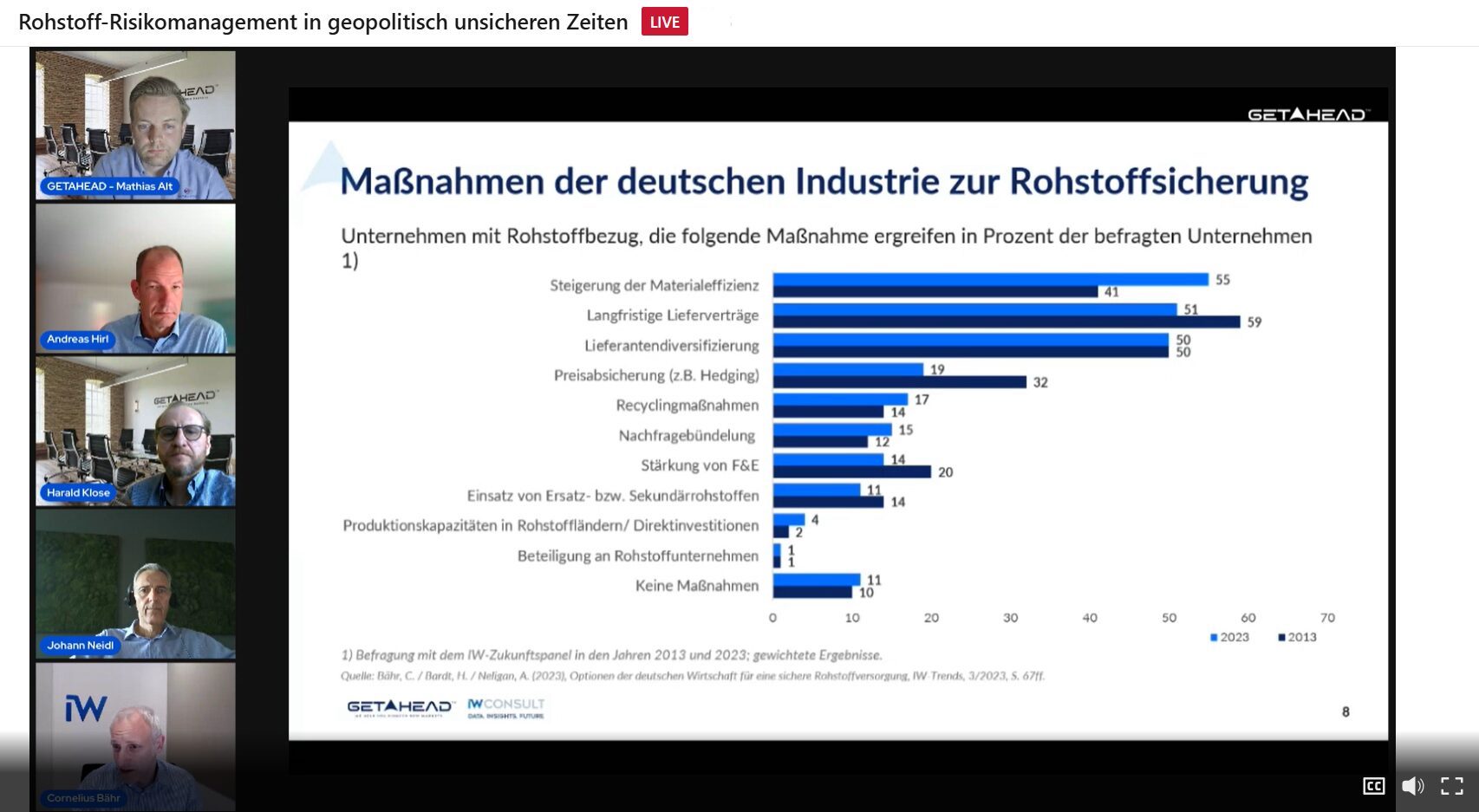
Participants explored the importance of supplier diversification, long-term supply agreements, material efficiency, recycling initiatives, and digital tools for risk monitoring and early warning systems.
Why Raw Material Risk Management Is Becoming Increasingly Important
Companies around the world are facing growing challenges in securing access to critical raw materials. Geopolitical conflicts, export restrictions, increasing demand, and volatile markets are forcing organizations to rethink their sourcing and procurement strategies.
Raw material risk management is no longer optional—it has become a key factor in maintaining competitiveness and ensuring business continuity.
The transition toward electric mobility, renewable energy, digitalization, and sustainable industrial production continues to drive demand for critical materials. At the same time, geopolitical tensions, trade barriers, and limited production capacities contribute to higher price volatility and increased supply risks.
Particularly affected are:
- Lithium, nickel, cobalt, and graphite for batteries and energy storage
- Copper, aluminum, silicon, and silver for renewable energy technologies
- Rare earth elements for electric mobility and high-tech applications
- Semiconductor materials such as silicon, gallium, germanium, and indium
The Impact of Geopolitical Risks on Supply Chains
Recent geopolitical developments have demonstrated how quickly global supply chains can come under pressure. Beyond energy price fluctuations, companies increasingly face supply risks related to strategically important raw materials and intermediate products.
Critical areas include:
- Basic chemicals and petrochemicals
- Aluminum and other industrial metals
- Agricultural commodities and fertilizers
- Liquefied natural gas (LNG) and energy products
Organizations must therefore focus on building more resilient and flexible supply chains to mitigate future disruptions.
Raw Material Dependency and Concentration in Key Countries
A key topic of the Executive Briefing was the strong concentration of global raw material production in a limited number of countries. For many critical materials, only a few nations dominate mining, processing, or refining activities.
China plays a particularly important role in rare earth elements and many high-tech materials. However, countries such as Australia, Indonesia, the Democratic Republic of Congo, and several South American nations are also strategically important suppliers of critical resources.
This concentration increases the risk of:
- Supply shortages
- Rising prices
- Export restrictions
- Geopolitical dependencies
Strategies for Securing Critical Raw Materials
The Executive Briefing presented several approaches that companies can use to strengthen long-term supply security. Effective raw material risk management requires a balanced portfolio of measures.
1. Increase Supply Chain Transparency
Companies need a clear understanding of:
- Which critical materials are used across the organization
- Which products and components contain these materials
- Which suppliers present elevated risk levels
Digital business tools and advanced analytics can provide greater visibility across the entire supply chain.
2. Diversify Suppliers and Sourcing Markets
Supplier and market diversification remains one of the most effective strategies for reducing dependency on specific regions or suppliers. This approach has become one of the most widely adopted risk mitigation measures within German industry.
3. Establish Long-Term Supply Agreements
Long-term partnerships help improve planning reliability and reduce both supply risks and price volatility.
4. Improve Material Efficiency
Using materials more efficiently reduces overall consumption while increasing resilience against market fluctuations.
5. Expand Recycling and Circular Economy Initiatives
Recycling is becoming increasingly important. Secondary raw materials can help organizations improve supply security while supporting sustainability goals.
6. Build Strategic Inventory Buffers
For highly critical materials, maintaining strategic inventory reserves can provide additional protection against supply disruptions.
7. Evaluate Material Substitution Opportunities
Alternative materials and technological innovations can significantly reduce dependence on individual raw materials.
The Role of AI and Digital Business Tools
Leading companies increasingly rely on digital solutions to identify risks early and support data-driven decision-making.
Examples include:
- Raw material market monitoring
- Supplier risk assessments
- Market intelligence and analytics
- AI-powered early warning systems
- Automated risk detection
These tools enable companies to proactively manage risks and respond more quickly to changing market conditions.
The Next Decade Will Be More Challenging
One of the key conclusions from the Executive Briefing is that raw material procurement will become significantly more challenging in the years ahead. Companies must therefore develop balanced sourcing strategies, strengthen supply chain resilience, and diversify their procurement structures across both regional and global markets.
GetAhead supports organizations throughout Southeast Asia and India with supplier identification, supplier screening, risk assessments, technical project management, and the development of resilient supply chains.
Watch the Full Executive Briefing
In the Executive Briefing, experts from industry, consulting, and procurement discuss current developments in global raw material markets, the impact of geopolitical risks, and practical strategies for securing supply chains and critical materials.
Key takeaways include:
- Which raw materials are currently considered most critical
- Why geopolitical tensions are creating sourcing challenges
- How companies can reduce price and supply risks
- The role of data transparency, AI, and supplier diversification
- How successful raw material risk management strategies are implemented in practice
GetAhead helps companies develop resilient sourcing strategies, identify qualified suppliers across Southeast Asia and India, and build robust global supply chains that support long-term growth and competitiveness.

 Call
Call 